This innovative technology has helped our patients with the most severe neck and back pain achieve lasting results.

Non-Surgical Spinal Decompression

RELIEVES SPINAL PRESSURE

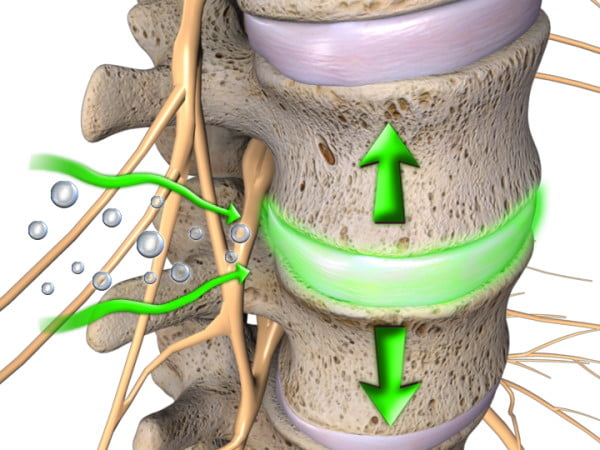
Our treatment relieves the pressure on your spine, by providing a series of slow pulls, holds and releases, creating a vacuum effect in the disc. Over time this draws the herniated disc material back into place and improves the nutrient rich blood supply for disc hydration.

BACK PAIN HELP

If you experience low back and neck pain or tingling/pain in the arms and legs, spinal decompression could help you. We get results with spinal conditions when other treatment options have failed.

FACILITATES NATURAL HEALING

Non-surgical spinal decompression alleviates symptoms and facilitates the body’s natural healing response.
We started offering this specialised treatment to those suffering from the following conditions because they were not responding to traditional approaches:
Bulging/herniated discs
Degenerative joint & disc disease
Facet Syndrome
Failed Back Surgery Syndrome
Spinal Stenosis

Holistic Care


RESEARCHED RESULTS

Success is demonstrated in the research with 91% of patients reporting improvements of 70% or higher after the treatment program.


OUR COMBINED APPROACH

At equilibrium our Chiropractic structural corrections and Class IV Laser treatments are combined with your Spinal Decompression treatments to optimise results.


DRUG FREE

We are the only clinic in the north of Tasmania to offer Hill DT non-surgical spinal decompression therapy. It is a drug-free treatment that stimulates healing within the spinal joints and discs.

Frequently Asked Questions

If you have any additional questions, please contact us.

1. Why have we implemented HillDT decompression therapy in our clinic?

We’ve implemented the HillDT table (imported from the USA), the most advanced decompression table in the world, as an alternative to surgery and traditional conservative treatments.

Studies demonstrate high reliability of success especially with, but not limited to, disc herniations.

2. How does spinal decompression work?

Non-surgical spinal decompression specifically targets the intervertebral discs and facet joints and treats a variety of common spinal conditions.

Ultimately, decompression creates a negative pressure within the disc.

This ‘vacuum effect’ draws herniated disc material back into its original place. It also draws the supply of nutrition from intervertebral disc arteries which are essential for healing the disc wall.

The supply of nutrition during healing is crucial for permanent results and certain nutritional protocols are also recommended.

Dried-up or dehydrated discs, known as “desiccated”, are often associated with spinal degenerative joint disease (DJD).

Drawing fluid back into the discs with non-surgical decompression has been shown on MRI to both rehydrate discs and reverse the thinning of discs associated with many spinal disorders.

We also utilise Class IV K-Laser to maximise disc hydration by improving circulation and initiating cellular healing.

3. How is spinal decompression different to traditional traction?

Traditional traction does not perform computer controlled logarithmic cycles.

Traditional traction does not provide biofeedback from the patient to the computer via the table’s sensors.

Traction is created with cables, pulleys and weights.

Our technology has a computer-controlled actuator that moves logarithmically.

If our table senses, via its biofeedback capabilities (at a rate of 10,000 pulses per millimetre), that the patient is approaching their threshold, it reduces the tension.

The gentle pulling action partially releases and the treatment remains synergistic with the patient.

High success rates have been demonstrated with decompression therapy.

4. Do I need a Chiropractic consultation prior to starting spinal decompression?

Yes. A full health history, orthopedic and neurological examination are required to establish whether you’re a good candidate for commencing non-surgical spinal decompression.

X-rays, CTs and/or MRI will need to be studied so your Chiropractor can determine the exact program and protocol required on the spinal decompression table.

5. Does it replace our Chiropractic care?

Studies show that better outcomes are achieved when spinal decompression is implemented in conjunction with Chiropractic care.

At equilibrium, we utilise low force Chiropractic techniques.

If you have not received results from previous physical therapies then you might find our spinal decompression therapy remarkably beneficial.

We also work in conjunction with your current practitioner (Chiro/Physio/Osteo/GP&Specialist/Podiatrist/Exercise Physiologist etc), if you would prefer to continue treatment with them whilst undergoing your non surgical spinal decompression program.

6. How long does it take?

Generally, it takes 8–12 weeks for a disc to heal when utilising this therapy.

Usually 20–30 treatments are required over this time. (Studies demonstrate a minimum effective dose of 20–24 treatments).

Ideally 2–3 treatments per week is best, later dropping to twice a week as you improve.

You should allow 30–35 minutes per session.

We monitor your progress and should we become concerned with your condition we will refer appropriately.

7. When will I feel better?

Some people feel an improvement after their first or second visit, others on their 10–14th, and others not until the 20–24th.

It depends on many factors, such as how much inflammation is present, how long you have had the problem and how severe the problem is.

In particular, with disc herniations, the severity or classification of the herniation also influences the success rate.

Following prescribed advice with nutrition and minimising harmful activity will also be important.

Every case is different and typically as with any procedure, a 100% guarantee cannot be given.

8. What does spinal decompression feel like?

At the beginning of each session, you will feel a gentle pulling sensation, which you will grow accustomed to as it is very relaxing.

In fact, it is not uncommon to fall asleep during the treatment!

It is normal to feel some stiffness in the target area when you first get up from the treatment, but this often fades by the time you’ve walked out of the clinic.

Sometimes a mild flare up can occur, this is also normal and temporary and should pass within a few days.

If you have leg/arm pain or pins and needles, you may experience an increase in neck/back pain as the symptoms in the arm/leg disappear.

9. Who is NOT a candidate for Non-Surgical Spinal Decompression?

Certain pre-existing health conditions are contra-indicated for non-surgical spinal decompression and may exacerbate your condition. If you have any of the listed health issues below, you will be unable to utilize the Spinal Decompression therapy.

• Hypermobility issues (eg. Marfan’s Syndrome or Ehlers Danlo’s Syndrome)
• Spinal Tumour/Cancer
• Osteoporosis (Osteopaenia is okay)
• Unhealed fractures
• Abdominal aneurysm or recent abdominal surgery
• Severe Hiatus Hernia
• Infections such as osteomyelitis
• Unstable Spondylolisthesis
• Rheumatoid Arthritis
• Meningitis/Arachnoiditis
• Cauda Equina Syndrome
• Acute Joint injury
• Cardiac or Respiratory insufficiency
• Pregnancy
• Claustrophobia

Our other services that we provide at equilibrium such as Laser Therapy and Low force Chiropractic may be able to assist and manage your pain/issues. If you are unsure, please contact us via phone or email: [email protected]

Research Citations (Decompression)

Orthopedic Technology Review (2003: 6 (5)) “Surgical Alternatives: Spinal Decompression”.

CONCLUSION: 86% of the 219 patients who completed the therapy reported immediate resolution of symptoms, while 84% remained pain free for 90 days post-treatment. Physical examination findings showed improvement in 92% of the 219 patients and remained intact in 89% of these patients 90 days after treatment. It was shown to be effective for herniated and degenerative discs.

Journal of Neurological Research (Vol.29, No.3, March 2003). “Efficacy of vertebral axial decompression on chronic Low Back Pain”.

CONCLUSION: 144 patient study showed 76% achieved remission of pain. Except in emergent conditions, Vertebral Axial Decompression should be used on all conditions before surgery is undertaken.

US Musculoskeletal Review 2007. “Magnetic Resonance Imaging findings after Non-surgical Spinal Decompression”.

CONCLUSION: The follow up MRI image revealed rehydration of the discs at L3/L4, L4/L5, L5/S1 of a herniated disc patient.

American Journal of Pain Management (Vol.7, No.2, April 1997). “Decompression, Reduction and Stabilization of the Lumbar Spine: A Cost Effective Treatment”.

CONCLUSION: 86% of herniated disc patients achieved ‘good’ (50-89%) to ‘excellent’ (90-100%) improvement results with spinal decompression therapy. Sciatica and back pain were relieved. Facet Arthrosis patients, 75% obtained ‘good’ to ‘excellent’ results with spinal decompression therapy.

SPINE (Vol.31, No.15, 2006). “Disc Distraction shows evidence of regenerative potential in Degenerated Intervertebral Discs”, Thorsten Guehring M.D, et al; Department of Orthopedic Surgery, University of Heidelberg, Germany.

CONCLUSION: This study confirms that disc distraction enhances hydration in the degenerated disc and may improve disc nutrition via the vertebral endplates.

Anesthesiology News, (Vol.29, No.3, March 2003). “Vertebral Axial Decompression reduces Chronic Discogenic Low Back Pain; A four-year study”.

CONCLUSION: Four-year follow-up after decompression therapy shows a sustained 86% reduction in pain and that 91% of patients had resumed their normal activities and remained pain free.

Archives of Physical Medicine and Rehabilitation Medicine, (February 2008). “Protocols for patients with activity - Limiting Low Back Pain”.

A total of 296 patients with low back pain and evidence of a degenerative and or herniated disc at one or more levels were in this study. An eight-week course of treatment consisting of 5, 30-minute sessions of Spinal Decompression therapy per week for four weeks and 1, 30-minute session for additional four weeks. CONCLUSION: Patients showed continued statistical improvement in both pain scores and functional movement scores after their treatment programs were completed for 180 days post treatment.

Gose, et al: Journal of Neurological Research (Vol.20, No.3, April 1998). “Vertebral axial Decompression Therapy for pain associated with herniated or degenerated discs or facet syndrome; An outcome study”.

CONCLUSION: Treatment was successful in 71% of the 778 cases in pain reduction. Improvements in mobility and activities of daily living were strongly correlated within pain reduction.

Keeney, et al, SPINE, (Vol.38, No.11, May 2013). “Early Predictors of Lumbar Spine Surgery aft Occupational Back Injury; Results from a prospective study of workers in Washington State”.

CONCLUSION: Reduced odds of surgery were observed in patients younger than 35 and those who first went to a Doctor of Chiropractic. Approximately 42.7% of workers who first saw a surgeon had surgery in comparison to only 1.5% of those who saw a Chiropractor.

Liliedahl, et al, JMPT (Vol.33, No.9, 2010). “Cost of care for common back pain conditions initiated with Chiropractic Doctor Vs. Medical Doctor as first Physician: experience of one Tennessee based General Health Insurer”.

CONCLUSION: Beneficiaries in the testing sample had lower overall costs for treatment of LBP if they initiated care with a Doctor of Chiropractic when compared to those who initiated care with a Medical Doctor. Paid costs were almost 40% less with care undertaken with a Doctor of Chiropractic, compared to a Medical Doctor.

Street, JT, et al, SPINE, (Vol.12, No.1, 2012). “Morbidity and Mortality of major adult spinal surgeries: A prospective cohort Analysis of 942 consecutive patients”.

CONCLUSION: Out of 942 patients, 822 (87%) had at least one complication and there were 14 (1.4%) mortalities. Major Spinal Surgery in the adult is associated with a high incidence of complications during and after surgery. Identification of a very high rate of previously unrecognised postoperative complication, which adversely affect time in hospital.

Start Your Recovery Today

Find out if you are a good candidate for Non-Surgical Spinal Decompression.  Call us or text 0429 958 905
CLICK HERE TO CALL AND BOOK AN APPOINTMENT
“We are always striving to achieve outstanding results through our dedication to Chiropractic excellence and best serve our community”.
0429 958 905
All Rights Reserved | equilibrium © 2026